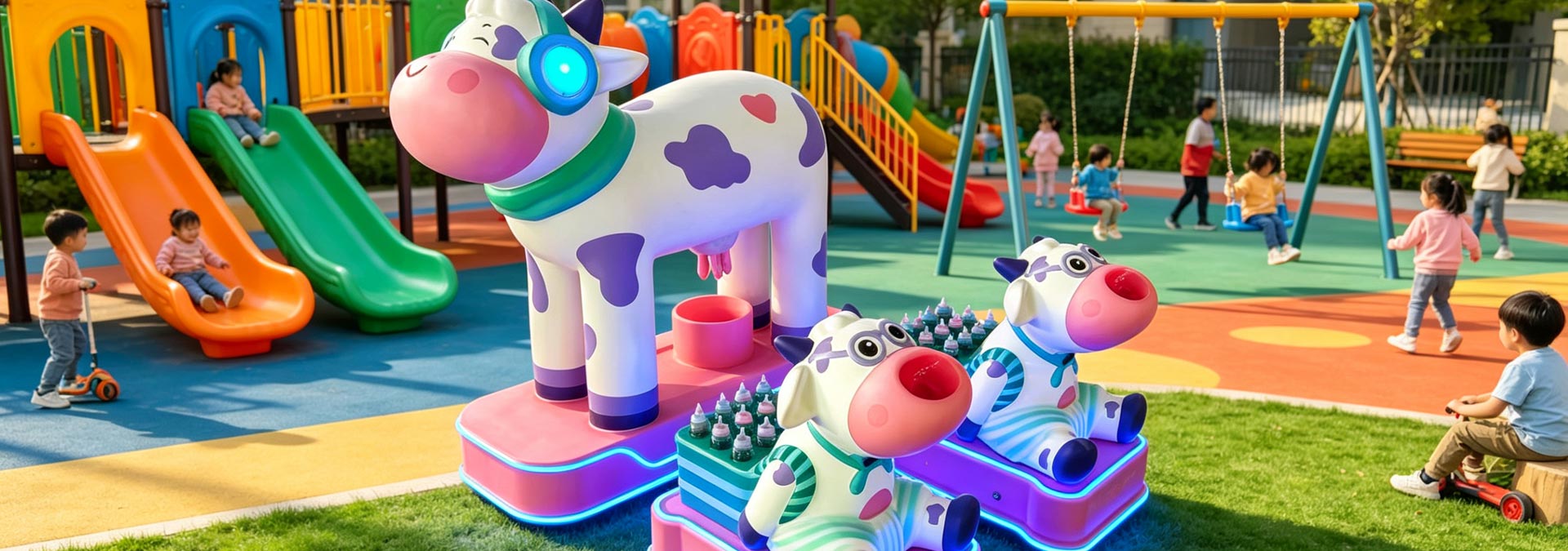
The equipment for indoor children's playgrounds typically requires preliminary theme park design and planning after the site selection. Preliminary planning serves as a blueprint. Only after the blueprint is drawn can we make marks in the next process and establish the theme park design according to the operator's expectations.
However, on the eve of planning an indoor children's playground, we should also pay attention to some issues when drawing the blueprint. If these issues are not handled properly, they may seriously affect subsequent store operations. So, what are the key planning points that operators need to pay attention to.
Firstly, when planning and purchasing children's play equipment for indoor children's parks, we should pay attention to the age differences among children. Children of different ages have different entertainment projects suitable for them. Therefore, when planning to purchase equipment, operators should pay attention to selecting according to the age level of children in the area. If there are many older children, they can purchase more electronic games and electric equipment; if there are more young children, you should purchase play equipment with higher safety and light power.
Secondly, when planning an indoor children's park, attention should be paid to the dynamic and static matching of amusement projects and the "alternation of hot and cold". What is the dynamic and static matching of entertainment projects? Some power-driven equipment, such as carousels, bumper cars, and pirate ships, are usually driven by electricity and have stronger maneuverability, suitable for older children to play; non-powered amusement equipment such as slides, ocean ball pools, and children's playgrounds are suitable for young children.
 Scan for more content
@2016-2026 Zhongshan Dingchen Amusement Equipment Co., Ltd. All Right Reserved 粤ICP备2026089923号-1 Technical support:HUADIEGU